
Stainless or coated steel?
We build both, so we have no reason to push you toward either. The honest answer is that the environment decides, and the cost difference stops mattering the first time a vessel has to be replaced early.
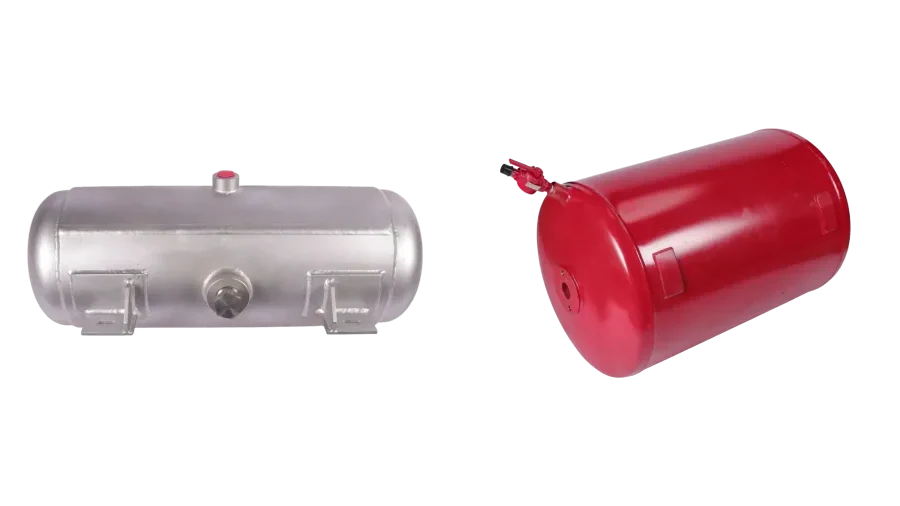
WHERE STAINLESS EARNS IT
- The vessel is washed down, or works in a wet or corrosive atmosphere
- Condensate sits in the receiver between duty cycles
- Replacement means taking a line or a vehicle out of service
- The finish has to stay inspectable, with the welds visible rather than filled
- The application will not tolerate coating breakdown or flaking
WHERE COATED STEEL IS RIGHT
- Dry, sheltered, indoor service where corrosion is not the failure mode
- A finish colour or coating system is specified by the customer
- Cost per unit matters more than service life on a short-lived installation
- The vessel is one part of an assembly that is coated as a whole anyway
What actually differs
- Corrosion happens from the inside as often as the outside
- Compressed air carries moisture, and moisture collects at the bottom of a reservoir. A coating protects the outside from the weather; it is the inside, the drain boss and the weld heat-affected zones that usually decide how long the vessel lasts.
- Cost over life, not cost at purchase
- Stainless costs more to buy. Whether it costs more to own depends entirely on whether the coated alternative would have been replaced once during the same period, and on what that replacement costs you in downtime rather than in steel.
- The weld as the finish
- On an uncoated stainless vessel nothing is filled, painted or hidden, so what you see is what came off the bench. That is an argument for stainless when the joint has to be inspectable, and an argument against it when a shop would rather you did not look.
- Weight and mounting
- The material changes the plate thickness needed for a given pressure, which changes the weight, which changes the brackets. It is not only a surface decision.
Frequently asked
- Should I choose a stainless or coated steel air reservoir?
- The environment decides. Stainless where the vessel is washed down or works in a wet or corrosive atmosphere, or where replacement means downtime. Coated carbon steel in dry sheltered service where corrosion is not the failure mode.
- Is stainless more expensive over the life of the vessel?
- It costs more to buy. Whether it costs more to own depends on whether the coated alternative would have been replaced once in the same period, and what that replacement costs in downtime.
- Can you supply the same design in both materials?
- Usually. The plate thickness changes with the material so the drawing is not identical, but the envelope and fittings can be carried across.
- Do you coat in house?
- The coating system is specified by the customer. Tell us the environment and whether the coating must meet a standard, and we will confirm the system before quoting.
Send us the drawing and we will tell you the truth. Request a quote →