
How to specify an air reservoir
Most enquiries arrive missing the same three things, and every one of them changes the price. This is what we need in order to quote, why each item matters, and what happens downstream when it is guessed instead of specified.
THE TWO NUMBERS THAT DECIDE EVERYTHING
Nominal volume is where the design starts, but it is not the whole answer: the swept volume depends on the head form and the port arrangement, so the figure on the drawing and the figure the vessel actually holds are not always the same number. Tell us which one you mean.
Working pressure sets plate thickness, head form and the test regime together. It is the single item most often left out of an enquiry, and without it a quotation is a guess dressed as a price. Send the test pressure as well if your code specifies one.
WHAT ELSE CHANGES THE BUILD
A vessel that fills and empties continuously is not the same job as one that holds a reserve. How hard the receiver works affects material choice, drain arrangement and how quickly corrosion becomes your problem.
The end of a pressure envelope is where the geometry does the work. A dished end and a flat end are different vessels with different thicknesses, and swapping one for the other late is not a small change.
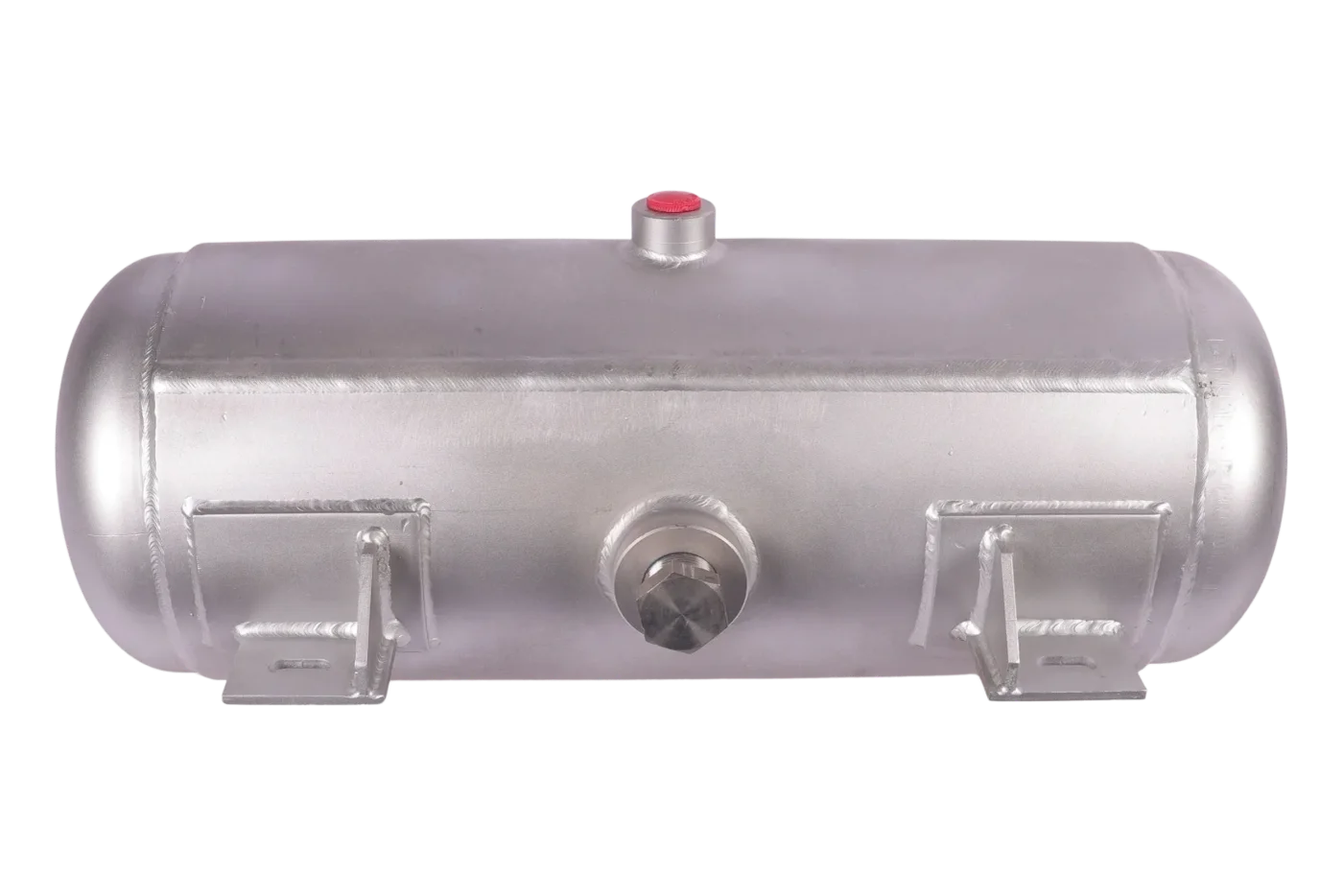
Brackets, feet and lifting points. In our experience most late changes on a job come from this and not from the pressure envelope, because it is the part nobody thinks about until the vessel arrives on site.
The seven things we need to quote
- A drawing, or a sketch
- A hand sketch with dimensions is enough to start. We will tell you what is missing rather than quoting around the gap.
- Capacity and working pressure
- The two numbers that decide plate thickness, head form and test regime.
- Material and finish
- Stainless, coated, or left bare. Say if the weld has to stay visible.
- Quantity, and whether it repeats
- A one-off and a monthly schedule are different jobs. Both are welcome, but they are priced differently and tooled differently.
- Standards it must satisfy
- And who inspects: you, your customer, or a third party, and at which hold points.
- How it mounts and gets handled
- Brackets, feet, lifting points.
- When you need the first one
- Not the whole order. The first piece you can put in front of someone.
Frequently asked
- What if I only have some of the specification?
- Send what you have. A short conversation usually settles the rest faster than a form does, and we would rather ask the question now than discover it after the plate is cut.
- Does a bigger air reservoir always help?
- No. Oversizing costs plate, weight, floor space and test time, and it does not fix a compressor badly matched to the demand. Size it to the duty rather than to a round number.
- Can you work from an old vessel instead of a drawing?
- Yes. Send a photograph, or the vessel itself. Working back from an existing part is normal here.
- What documentation comes with the vessel?
- Welding procedures, welder qualifications, material identity against the job number, and inspection and test results. If the file is not ready, the vessel is not ready.
Send us the drawing and we will tell you the truth. Request a quote →